For an owner in Texas the receipt and the later report are different payees.
The practice is in Dallas. An owner phoning from the Hill Country, the Gulf coast, or the Panhandle reaches that same video call, and we are all Texans once the call connects. The payable line is still the first thing read.
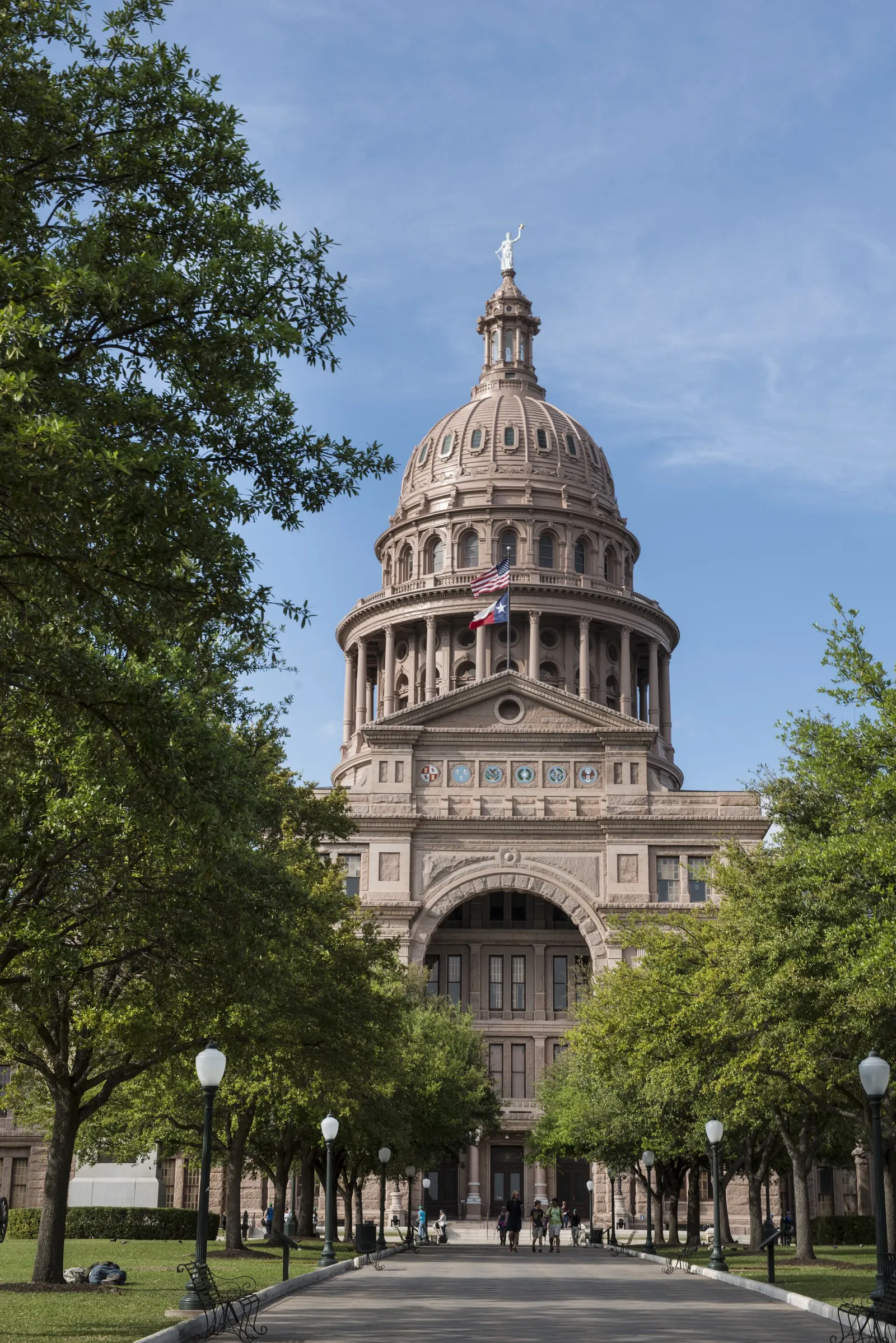
Photo by Carol M. Highsmith, public domain, Library of Congress.
A Texas owner often holds the same three papers as an owner anywhere else, and then a fourth paper arrives that only this state sends. The first is the receipt from the office that accepted the company. The second is the IRS letter that assigns a number and does not charge for the letter. The third is a vendor invoice that can look stern. The fourth is the yearly franchise report, and it is the one people staple to the formation receipt because both pages mention the company.
Steven Palmieri, the Tax CFO, reads this pile from Dallas. The page is for a company formed in Texas or carrying a Texas tie. No second room of this practice sits in the Hill Country, on the Gulf, or in the Panhandle. Video is the visit. The monthly close does not change cities. Whoever the paper says to pay is still line one.
Formation in Texas puts two public names on the table, and a check to one leaves the other open. That first receipt, the 300 dollars, names the Secretary of State as the payee. The later franchise report, and the short information sheet that travels with it, are the Comptroller's papers. The shop that assembled the packet is a private third name. The IRS letter is often a fourth page with a number and no amount.
Form 205, on the Secretary of State instructions, prices a limited liability company certificate of formation at 300 dollars. That 300 dollars is the formation receipt in this pile. It belongs to the day the state accepted the company. We book it under the name the receipt prints, and a later year does not get a copy of that same line just because the company name matches.
Form 205 can be signed by a single organizer. That signer may be a human who is at least 18, or some other entity, and Texas residency is not required of the signer. Nobody has to stamp or notarize Form 205 before the packet leaves. Nothing in those instructions picks the owners for you. Ownership is a different conversation, and it is a lawyer's conversation when you want advice on it.
Someone has to accept the job of registered agent before the certificate names them. An acceptable agent is either an entity that is already allowed to do business in Texas or a human who lives in Texas. Naming the brand-new company as its own registered agent is refused. Consent is real even though a copy of it stays out of the filing packet. A blank consent is not something we pencil in after the fact.
Papers have to be handable to a person at the registered office during a normal business day, so a mailbox with no person behind it fails that test. Since the opening of 2022, Form 205 has asked for a first mailing address. Comptroller franchise letters go to that line. The mailing line is part of the formation paper. It is not an extra charge stacked on the 300 dollars.
Agent and office both have to stay current after formation day. A change in either one is a Secretary of State statement, not a note on the franchise report. Let the agent lapse, or let the office lapse, and the Form 205 instructions say the state can end the company without a request from the owners. That risk lives on the agent record. It does not reopen the 300 dollar receipt, and it does not convert that receipt into the May franchise paper.
The company agreement, and any series of members or assets inside it, is legal writing. Series limited liability companies appear on the Comptroller's list of entities that can owe franchise tax, in publication 98-806. This page never claims a series by itself fences off a debt. The statute is what an owner reads with a lawyer when that fence is the goal. We can park the tax dates next to the choice those two make. Drafting the agreement is not this practice.
An assumed-name fee was not printed on the Secretary of State page we rely on for Form 205. A remembered dollar amount for an assumed name will not be written onto this page. If you are filing a name the company will use in public, confirm the current steps with the Secretary of State before anyone books a number from memory.
The IRS letter still has no user fee. The employer-number page says to form the entity with the state before applying, and the number itself is free. In Texas that means the certificate is accepted first and the letter comes after. We keep the letter in the formation file because banks and payroll need the number. We do not book a charge from a page that does not ask for one.
Choosing S status is a federal decision about which return carries a later year. It does not mint a new Texas entity, and it does not go back and change the 300 dollars on the formation receipt. The election paper is Form 2553, and every shareholder signs it. Park the acceptance beside the receipt with both dates visible. Blending the dates is how a one-day state payment starts to sound like the story of the whole year.
Two worked examples live in the Form 2553 instructions, and they stay the IRS examples rather than a rule we invent. Example one is a calendar-year corporation whose first tax year opens on January 7. Two months from that opening lands on March 6, and fifteen further days land on March 21, so the window in the example is January 7 through March 21. Filing before January 7 fails in that example because no earlier tax year existed. Example two is a calendar-year corporation leaving C status and wanting S status for a year that opens January 1. The instructions place two months and fifteen days after January 1 on March 15, and they allow the election during the year before, up through that March 15. March 15 is not a universal deadline for an owner whose year starts on some other day.
A late election looks to Revenue Procedure 2013-30, and the instructions want that procedure's name written across the top margin. A path that misses the procedure generally means a private letter ruling plus a user fee. We open the procedure that is current before anyone says a late election will be taken. A ruling's user fee, when that is the road, is a separate payable. It does not join the Texas formation receipt.
After the S election, an owner who actually works takes pay for that work, and only what remains leaves as a distribution. Reclassifying a distribution back into wages is something the IRS can do, and the reclassified amount stops at what the owner was paid. A dollar amount for reasonable pay is left off these sentences on purpose. The payroll page is where a provider the owner already runs gets switched on. Neither the wage nor the leftover profit is the formation receipt.
Franchise tax in Texas is the yearly price of the privilege of operating as a company. The certificate of formation is the event that pulls that yearly paper into the pile. A person who stayed a sole owner and never formed anything generally stays off the report. So does a general partnership made only of humans, unless it is an LLP. Odd structures get matched to publication 98-806 against the actual file, not against the look of the envelope.
The yearly paper reaches limited liability companies and corporations, a one-owner company included, and a company that already filed a federal S election included. That federal filing does not close the Texas report. May's franchise report does not borrow the federal return's due day.
May 15 is the annual report's ordinary day, and when May 15 lands on a weekend or a holiday the next business day becomes the day. Report years 2026 and 2027 treat 2,650,000 dollars of revenue as a ceiling. At that ceiling or under it, franchise tax computes to nothing and the long report that figures the tax stays unfiled. The short information paper is still owed unless the Comptroller has already put the company on the skip list.
Form 05-102, the public information report, is the short paper for a corporation, a limited liability company, a limited partnership, a professional association, or a financial institution that was organized in Texas or is tied to Texas. Form 05-167, the ownership information report, is the short paper for the other taxable entities that have a Texas organization or a Texas tie, and what it says about ownership is kept confidential. Inside a combined group, each member organized in Texas or tied to Texas sends its own sheet. The group does not get to share one sheet.
Even a year whose tax computes to zero still sends the information paper. Officer changes that happen after you file can wait for the following year's sheet. Amending is for a mistake or a critical need, not for routine turnover. Swapping the registered agent is a Secretary of State filing, so Form 05-102 and Form 05-167 do not carry that swap.
An unfiled short paper can take away the company's right to do business in Texas. That includes the right to sue or to defend in a Texas court, and it can put officers and owners on the hook for certain debts. Banks and other financial institutions sit under a different forfeiture rule. Handle the short paper so it does not become its own mess. Do not let that mess pretend to be a question about what the 300 dollar receipt cost.
A required long form uses one margin recipe, and a combined group uses the recipe the group picked. Recipe one stops at seventy percent of revenue. Recipe two starts at revenue and subtracts the cost of the goods. The third recipe takes compensation off the top of revenue. Recipe four starts at revenue and subtracts one million dollars. A company that only sells services usually has no goods-cost subtraction the statute will allow, outside the industry exceptions that statute lists.
The compensation subtraction counts W-2 pay and cash paid to officers, directors, owners, partners, and employees, and it also counts health care, retirement, and workers compensation. Contractor pay shown on a 1099 is excluded from the compensation subtraction. Payroll taxes the company itself remits are excluded from it too. In 2026, and again in 2027, one person can contribute at most 480,000 dollars toward that subtraction. A 2024 cap does not get typed onto a 2026 report.
Report years 2026 and 2027 price a retail or wholesale margin at 0.375 percent. A trade that is neither retail nor wholesale is charged 0.75 percent on that same report. Annualized revenue of 20 million dollars or under is the door into the EZ computation. Walk through that door and the margin subtractions stay behind. The EZ rate in those two report years is 0.331 percent. Over the no-tax-due line, and not on EZ, the long form is the paper. The long form is also the paper when a margin subtraction will be used. The owner picks when a pick exists. We do not lock that pick on a worn-out Friday just to mail the report on Monday.
May 15 stays put unless that original day itself carries either the money or a Comptroller form. The extension money is generally the whole prior-year tax, or ninety percent of what the current report will owe. A company that only became subject during the prior year cannot lean on the prior-year number for its first annual report.
Webfile or Form 05-164 is the route for a company that is not on electronic transfer, and that route stretches the day to November 15. Paying 10,000 dollars or more during the previous state fiscal year puts the company on electronic transfer, with a first stretch to August 15 and a further stretch to November 15. Once franchise tax paid in the prior year has reached 500,000 dollars, extra time is available only through a TEXNET payment under code 13080 that clears while it is still timely. Do not mail Form 05-164 on top of that payment. The Comptroller publishes the hour that makes a TEXNET payment count as on time. That hour is read off the extensions page for the payment we are holding. An hour remembered from another year does not go into this file.
After the due day, the report itself carries a 50 dollar penalty. Franchise tax that arrives between day 1 and day 30 late picks up 5 percent. Franchise tax that arrives later than that picks up 10 percent. Day 61 is the first day the Comptroller interest clock is running on the unpaid tax. The interest percent lives on the Comptroller's interest page, and it is read on the day we prepare rather than copied from memory.
Count 60 days from the date the Texas connection ends. That window is when the last franchise report has to arrive. Ending the company, or cutting that tie, is the owner's decision. That ending is not finished until two items are in the folder. One item is the last franchise report. The other item is the certificate of account status issued by the Secretary of State. Order of the closing steps is read from the Comptroller page that is live that week. We do not guess the sequence from memory.
Imagine a shop built only for this paragraph. It is made up. It is not a client. It stands outside Dallas and outside Fort Worth, and its year's revenue is under 2,650,000 dollars. For 2026 that shop skips the franchise tax report and still sends the short information paper. Treat that shop as a sketch. Your own ledger stays outside the sketch.
Sales tax can land in the same first season as the formation receipt, which is why the two get added into one anxious total. They are different payables. The permit's name is the Comptroller. The certificate's name is the Secretary of State. Separate dates, separate accounts.
Texas sales tax opens with a statewide slice. On a taxable sale that slice is 6.25 percent. Local additions can reach 2 percent, and the stack of state plus local is capped at 8.25 percent. The rate locator is checked for the address on the day of the sale. No city percent is printed here, because a percent remembered from a different city is how a sales return leaves wrong.
A monthly sales-tax rhythm pays on the 20th. A quarterly rhythm sends reports in April, in July, in October, and in January. A once-a-year filer has January 20 for the year that ended. Saturday, Sunday, or a holiday pushes that sales-tax day to the next day the office is open. Filing on time and paying on time can trim 0.5 percent from the sales tax. Paying early can add another 1.25 percent. Neither trim is the 300 dollar formation receipt.
A marketplace that already put in writing that it would collect is reported inside total Texas sales and then taken back out of the taxable figure. Website sales, if the seller also has a site, stay in. Resale claims rest on Form 01-339. Writing down a permit number, or dropping a permit copy in the folder, still leaves the seller without that form. Keep the form with the sales records for four years, the same span gross receipts are kept. Uncertain resale means the form stays unsent and the sale is taxed.
The remote-seller harbor is prior-twelve-month Texas revenue under 500,000 dollars, and marketplace receipts stay inside that test even if the marketplace was the collector. A person whose home is in Texas still obtains a sales-tax permit even when every sale runs through a marketplace. A short stay of inventory in a marketplace warehouse in Texas does not, by itself, force a permit while the harbor holds and the provider's written promise to collect is in the file. Over the line, the permit and the collection both start. The same inventory can also pull in a franchise-tax duty. Permit and franchise report remain two papers.
Form 01-799 carries a single local percent that the Comptroller recomputes. Whatever number is live on preparation day is the number we use. A percent saved from an older visit does not get typed onto the return. Before anyone names a restart day, the termination form and the restart rule are read on the page that is live.
Under the beneficial-ownership rule whose effective day is August 14, 2026, a domestic company created in the United States sits in the group excused from the first report and from later updates. A foreign company that registered to do business in a state does not borrow that excuse. The rule has shifted more than once, so the FinCEN page that is current gets read before we tell anyone the report is gone. An IRS page about the employer number may still gesture at that report. FinCEN is the page that governs.
We turn down a letter that would assure a lender the books are a certain way. Statements about the financials belong with the holder of that credential. The franchise report is a tax paper, not that statement. Read the disclosures page before anyone asks for the assuring letter. The work here is the franchise report and the books that feed the report. The work is not an audit.
Bring the paper that started the worry. If it is the 300 dollar receipt, we will say so and we will post it once. If it is the May report, we will keep it in the year it names. If it is the IRS letter, we will not invent a fee. If it is a vendor bill that only looks official, we will read the payable line out loud. The number printed with the signoff is the same queue when speaking is easier than typing.
Name the Texas paper you hold.
A payee and a date are enough to start.
You will be talking to the Steven Palmieri practice.